How to Measure SEO Success: A Practical Playbook for Marketers and Site Owners
SEO isn’t what it used to be and the way you measure SEO success has too. In 2025, your potential customers may find answers through AI-generated overviews, voice prompts, camera searches, or chatbots. Even the analytics tools you rely on have changed massively.
This guide is made to help you get away from outdated vanity metrics and focus on what really matters: how people find your brand, how search drives revenue and enquiries, and how to stay visible when AI‑powered search controls the SERP. We draw from the latest research on AI search, share actionable GA4 tips, and provide a step‑by‑step action plan. Many marketers waste time tracking irrelevant indicators. Use this playbook to cut through the noise.
The New SEO Landscape: AI Overviews, Voice Search and Baseline Shifts
AI Overviews and zero‑click searches
Google’s AI Overviews (previously known as SGE) now appear above many search results, summarising content from multiple sources. Research notes that zero‑click searches are soaring because users often get the answer without having to perform any other actions. With some estimates suggesting AI Overviews reduce click‑through rates by 15% to 25%
What this means for you: Don’t panic when clicks drop. A high number of impressions with a declining click‑through rate often means your page is being cited in the AI summary.
Voice and camera search are here.
Google’s AI Mode has rolled out to more languages and is experimenting with agentic search, letting users complete tasks directly from results. Search Live, launched in the U.S. in 2025, accepts voice and camera inputs to identify objects or answer questions.
Meanwhile, ChatGPT with voice and vision, Perplexity’s AI browser and Microsoft Copilot have become alternative search engines. An August 2025 analysis urges marketers to treat AI chat platforms as discovery channels alongside traditional search. To measure success in this environment, track referrals and mentions from these services.
Baseline resets: why your data looks weird!
If you have noticed abrupt changes in impressions or rankings in September 2025, you’re not alone. Google removed the &num=100 URL parameter that allowed requesting 100 results per page, causing third‑party rank trackers and Search Console counts to fluctuate.
Non‑branded versus branded demand.
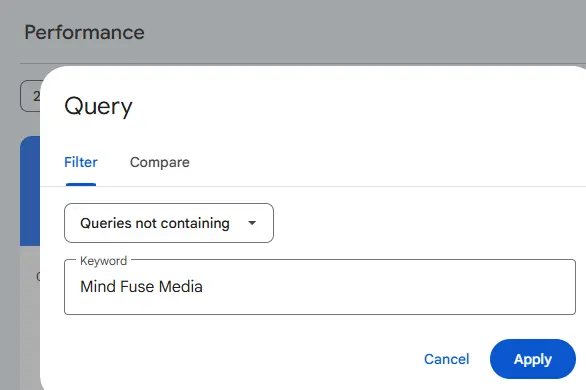
Real demand comes from people searching for solutions without using your brand name. In Search Console, filter out branded queries and track clicks for generic problem terms.
By growing non‑branded share signals, you’re reaching new audiences, so track branded searches separately.
Metrics That Matter in 2025
Non‑branded versus branded demand
Real demand comes from people searching for solutions without using your brand name. In Search Console, filter out branded queries and track clicks for generic problem terms.
By growing non‑branded share signals, you’re reaching new audiences, so track branded searches separately.
Share of search (SoS)
Think of share of search as share of voice for search engines. It measures your brand’s search volume relative to the overall niche and correlates strongly with market share.
To calculate:
- Pick your competitor set. Use only branded terms for each competitor.
- Get monthly search volume for each brand name.
- Add them up to get the category total.
- Divide your brand’s volume by the category total.
- Convert to a percentage.

Click‑through rate (CTR) on key pages
CTR remains a crucial indicator of how appealing your search snippets are. Data shows that the top organic result captures roughly 39.8% of clicks; positions two and three receive 19% clicks, followed by 10.2% for the remaining.
With AI Overviews in the mix, CTR can drop by 15–20%. If you have high impressions but low clicks, your snippets may need work, or your page might be referenced in an AI summary.
Impressions and zero‑click exposure
A surge in impressions paired with declining CTR is often due to AI Overviews or rich results. Monitor impressions in Google Search Console and cross‑reference with CTR to understand when your content is being surfaced but not clicked. Use this insight to refine copy, improve snippet schema, or target queries that encourage clicks.
Ranking distribution by intent
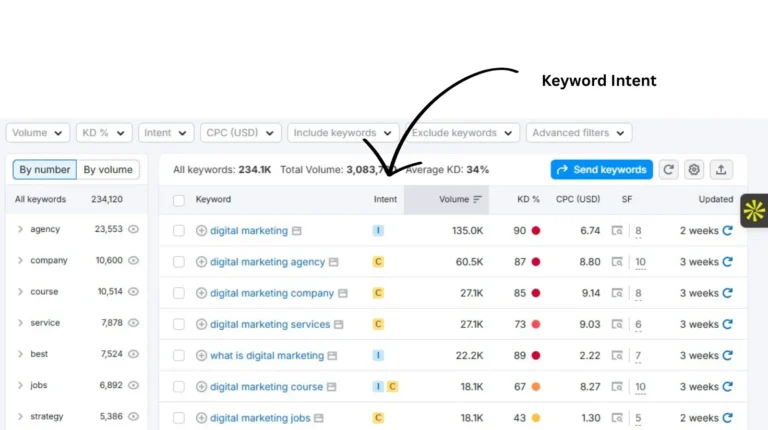
Instead of fixating on a single keyword, monitor how many of your target terms rank in the top 3, top 10, and top 20. Break them down by intent (informational, navigational, commercial) to see how well you’re meeting searcher needs. Ranking in the top positions is still valuable, but remember that AI features can answer queries directly.
Assisted conversions and channel attribution
Google Analytics 4 shows how SEO influences conversions throughout the journey, not only at the last click. Use the “Model comparison” and “Conversion paths” reports to see how many conversions organic search assists. Also track referral traffic from non‑Google sources such as social, newsletters, or partnerships; these channels may grow as AI search surfaces your brand.
Time to value
Time to Value is the time it takes a page to deliver business impact. Track days from publish to first non-branded click, then days from that first non-branded click to first enquiry or sale. Pages and topics with shorter Time to Value deserve more attention.
Engagement depth and conversion rate
Strong rankings only matter if visitors stay, act, and return. Use GA4’s engagement metrics with conversion rate to see which pages create real value.
The GA4 metrics that matter
- Average engagement time
- Engaged sessions
- Engaged sessions per user
- Engagement rate
- Events per sessio
GA4 Features Every SEO Should Use
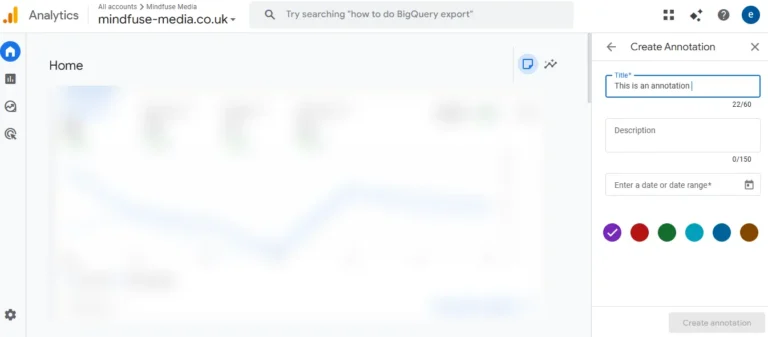
Annotations: Tell the story behind your data and keep you up to date
As of early 2025, GA4 finally lets you add annotations to charts. Use annotations to mark key events such as algorithm updates, major content releases, and new website releases.
Annotated timelines make it easy to explain dips or spikes to stakeholders.
Generated insights and machine‑learning alerts
GA4’s Generated Insights surfaces unusual trends, such as a sudden drop in organic sessions or a spike in conversions. Instead of combing through every chart, let the system alert you and then dig deeper into the outliers.
Benchmarking against competitors
October 2025 updates expanded GA4’s benchmarking feature to include abnormal metrics such as “New users” and “Total revenue. Compare your performance against competitors to set realistic goals. Use benchmarks as guidance, not gospel; factors like site size can skew the numbers.
Importing cost data from social platforms
You can bring non-Google ad spend into GA4 using cost data import or a partner connector. Pull in Meta, TikTok, Pinterest, Snap, and Reddit, so spend, clicks, and conversions live in one place.
This lets you see true return on investment and compare channels like for like. Align the view to your north star metric, whether that is revenue, qualified leads, or another goal.
Track your AI Referrals and Visibility
AI chat tools can drive high‑quality traffic. Track and optimise for these channels.
Create an AI referral channel in GA4
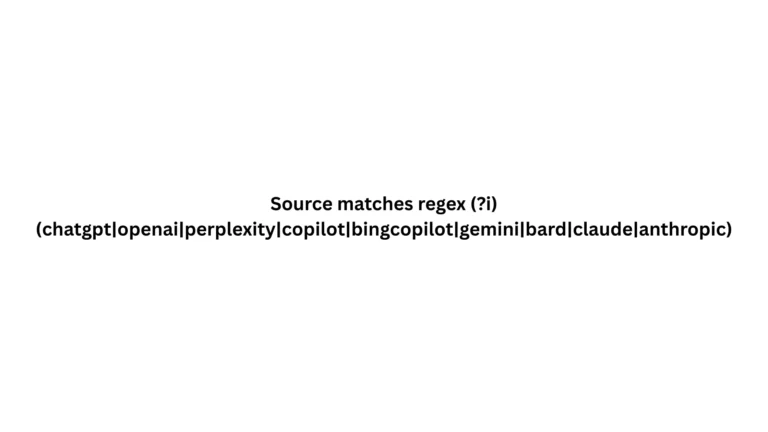
Set up a custom channel group called “AI Referral Traffic. Under channel conditions, use a regex pattern to capture sources like ChatGPT, Perplexity, Gemini, Copilot, OpenAI or Claude.
Regex Example
Monitor AI visibility and sentiment.
Tools like Uber Suggest AI Visibility report show how often AI models mention your brand and the sentiment of those mentions. High visibility with positive sentiment indicates you’re seen as an authority; negative sentiment signals a need to refine messaging. Track mentions manually if you don’t have access to a tool, and record each citation and note the tone.
Optimise Reports Across Search Engines and Assistants
Your audience may use Google, Bing, Baidu, Yandex, and AI chat assistants. A robust reporting stack should cover them all.
- Google Search Console: Use comparison mode to spot queries with high impressions and low clicks. Reset baselines after the September 2025 issue.
- Alternative search dashboards: Monitor Bing Webmaster Tools, Baidu Webmaster Tools, and Yandex Metrica if you serve those markets. Each platform offers unique insights into local behaviour.
- AI platforms: In the absence of official dashboards, rely on third‑party tools or manual logging to track citations and referrals. Log each AI citation as an event in GA4 or your CRM.
- Server logs: Analyse server logs to identify traffic from bots like ChatGPT or Perplexity.
Build an SEO Dashboard that Matters
Build an SEO Dashboard that Matters
Avoid these SEO measurement mistakes.
- Chasing vanity metrics: Total impressions or average position can look good, but may not drive revenue. Focus on non-branded clicks, engagement, and conversions.
- Misreading AI Overviews: Drops in clicks can coincide with AI summaries appearing on the page. Strengthen titles, add compelling snippets, and give a clear reason to click for details such as pricing, comparisons, or calculators.
- Ignoring new baselines. When search features, attribution rules or data collection change, set a new baseline before comparing periods. Note major algorithm updates, GA4 definition changes, and Search Console methodology shifts.
- Overlooking engagement. Traffic without engagement has little value. Track engagement rate, events per session, and conversion rate for your key pages.
- Neglecting AI-driven traffic. Some assistants and engines can show up as referrals or organic variants. Create custom channel rules for sources such as Bing Copilot and Perplexity, and watch brand vs non-branded trends to infer AI impact.
Conclusion
Measuring SEO success in 2025 means looking beyond keyword ranks and page views. It requires understanding how AI and multimodal search affect visibility, tracking non‑branded demand and share of search, and embracing GA4’s new features. By focusing on meaningful metrics, building an actionable dashboard and updating your baselines, you’ll gain clarity and confidence in your SEO strategy. This playbook equips you to adapt to the evolving search landscape and grow sustainably, no matter how search evolves next.