In today’s competitive digital landscape, simply “doing marketing” isn’t enough to drive consistent online growth. Many small businesses rely on random promotions or sporadic social posts without a clear plan, a non-strategic approach that often leads to wasted budget and poor results.
By contrast, strategic marketing is guided by clear goals, research, and coordinated execution across channels like SEO, content, PPC, and email. This article explores how a strategic approach to digital marketing can dramatically increase website traffic, with real-world examples and actionable tips.
What Is Strategic Marketing?
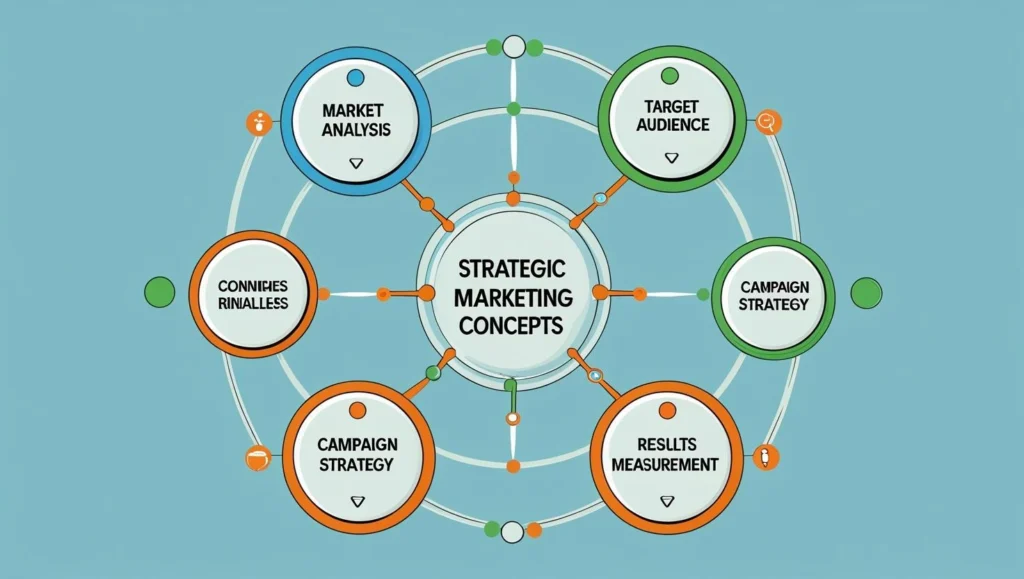
Strategic marketing means:
- Setting clear objectives aligned with business goals
- Understanding your audience and their search intent
- Choosing the right marketing channels based on ROI
- Coordinating messaging and campaigns across platforms
- Measuring, analysing, and optimising continuously
Non-Strategic Marketing Looks Like
- Running ads without defining your audience
- Posting content inconsistently or without SEO research
- Chasing trends that don’t align with your offer
- Making decisions based on opinion, not data
Why Strategic Marketing Outperforms
Businesses that execute a documented marketing strategy are 313% more likely to report success.
Benefits of Strategic Marketing:
- More traffic from channels like Google and social
- Higher conversion rates due to better targeting
- Lower cost per lead through smarter ad spend
- Sustained growth through SEO and content
Case Study: Lifestyle Magazine Traffic Doubles
At Mind Fuse Media, we worked with a digital lifestyle magazine stuck at ~5k monthly visits despite publishing weekly.
We:
- mapped their keyword universe
- – Analysed user intent behind target terms,
- Created and optimised SEO-friendly, engaging content
In under 6 months, their organic traffic more than doubled, bounce rate dropped, and average session time rose by 40%.

How Strategy Boosts Website Traffic
Content Strategy
Companies that blog strategically generate 55% more traffic. Content becomes an asset that ranks, earns links, and builds trust.
SEO Strategy
One local service company saw an 400%/+ traffic increase by targeting the right keywords and improving on-page SEO.
Paid Ads (PPC)
Without strategy, 40–60% of ad budgets are wasted. Strategic PPC means:
- Targeting buyer
- intent keywords
- Using audience segments and exclusions
- Testing ad copy and landing pages
Email & Retention
Triggered email campaigns have 100%+ higher engagement. Strategic marketers nurture subscribers with relevant content and offers.
Social & Distribution
Social media works best when guided by a strategy — knowing where your audience is, what content they share, and how to turn traffic into leads.
Why Non-Strategic Marketing Fails
- Wasted budget: Up to 60% lost to poor targeting
- Low ROI: No benchmarks or campaign goals
- Inconsistent branding: Confuses customers
- Missed opportunities: Competitors capture share
5 Steps to Build a Strategic Marketing Plan
- Audit your current activity
Use tools like Google Analytics and Search Console to assess what’s working. - Define clear goals & KPIs
Set SMART goals — e.g. “Grow organic traffic by 30% in 6 months.” - Know your audience
Create buyer personas based on real data, not assumptions. - Pick your channels carefully
Focus on 2–3 that match your buyer journey (e.g. SEO + Email + Paid). - Track, test, and optimise
Use dashboards and editorial calendars to stay consistent.